
Getting Lamb County Court Records
No single office holds every Lamb County court record. So match the office to the case type. Felony, district civil, and family matters belong to the 154th District Court. The constitutional County Court handles county criminal, civil, juvenile, probate, and mental-health files. Justice and traffic cases go through the issuing JP. The municipal clerk covers city cases. Federal documents are different: use PACER and the Northern District of Texas.
- Identify the court, case category, cause number, approximate date, and exact record needed.
- Check re:SearchTX for an available case, filing, hearing, or public document.
- Call the proper clerk and ask about online access, a public terminal, counter inspection, mail, email, or a written request.
- State whether the request is for a docket view, plain copy, certified copy, appeal record, transcript, or exhibit.
- Confirm the search, copy, certification, delivery fee, and expected response method before paying.
Written requests work best. Under Texas Rule of Judicial Administration Chapter 12, a request should identify an existing record and go to the office keeping it. The clerk does not have to build a new report or answer a research question.
Lamb County Split Clerk System
For 154th District Court files, the Lamb County District Clerk is the first stop. You will find the office in Room 212 at 100 6th Drive, Littlefield, Texas 79339-3366. The phone is (806) 485-0071. The fax is (806) 385-3554. OCA verification ties the office to district criminal, civil, and family categories. The JustWare case-management system is part of that setup.
The Lamb County Clerk sits in Room 103 at the same address. Reach the office at (806) 485-0053, with fax (806) 385-6485. This office handles County Court criminal, civil, juvenile, probate, and mental-health categories. It also runs property, recording, and vital-record functions. Say plainly that your request concerns a court file.
Lamb County District Clerk
100 6th Drive, Room 212
Littlefield, TX 79339-3366
(806) 485-0071
Lamb County Clerk
100 6th Drive, Room 103
Littlefield, TX 79339-3366
(806) 485-0053
Court Record Types
A docket is just a chronological index of case events. Behind it sits a file that may hold several products, each with its own custodian, format, and access limits.
- Docket or case-event views showing filed activity and settings.
- Pleadings, motions, returns of service, bonds, and filed attachments.
- Signed orders, judgments, dismissals, pleas, or other dispositions.
- Certified and noncertified electronic or paper copies.
- Clerk's records prepared for appeal.
- Transcripts, reporter records, and permitted in-court camera records.
- Exhibits that remain releasable under the governing access rule.
Ask for one product at a time. A clerk can price and route an exact document far more reliably than a request for everything. Trying to locate the file first? Start with the Lamb County case lookup, then carry the cause number into your copy request.
Lamb County Docket Versus File
A public docket entry may name a motion, order, or hearing. The document behind it stays unavailable. That gap matters most for attachments with sensitive data, family material, exhibits, and sealed records. A missing download does not erase the event. And a visible event does not guarantee access to every page behind it.
| Docket or Event View | Full Case File |
|---|---|
| Chronological index of activity | Pleadings and filed documents |
| May show hearing or disposition labels | May contain the signed order or judgment |
| Useful for finding dates and document names | Useful for reading the filed substance |
| Can remain public when an attachment is withheld | Can require redaction, payment, or restricted access |
The court's actual order controls. Never infer a ruling just because a motion was filed or a hearing was scheduled.
Inside a Lamb County Court Record
Fields vary by court and document. The official re:SearchTX civil interface model supports the inventory listed here, though local display and access can differ.
| Case Information | Court, category or type, filing date, and public status. |
|---|---|
| Parties and Attorneys | Public case-style, party, and counsel data subject to restriction. |
| Events | Date, event type, and comments in docket order. |
| Filings | Document title, filing type, pages, price, and access status where supplied. |
| Orders and Judgments | Signed court action, if filed and publicly releasable. |
| Exhibits or Reporter Record | Separate evidence or proceeding records that may use another request route. |
Discovery is generally not filed in the 154th District Court unless a rule or order requires it. So its absence from a clerk file may be normal rather than a portal defect.
Lamb County Property Form Warning
The County Clerk's OPR form shows how a good paper request works. It asks for recorded name, instrument number, volume, and page. Document type comes next. Requester contact, signature, and clerk completion information round out the form. It also points to public viewing stations. Record books are there too. But those fields suit public or property records, not a universal court-docket request.
Use the right form: Do not send a 154th District Court copy request on the property-record form unless the District Clerk confirms that route.
Skip the generic property form and be specific. In your Lamb County request, give the court, the cause number, the document title, the date range, and the certification level you need. The clerk can then tell you which form or written format applies.
Fees and Certified Copies
A plain copy just reproduces the record. A certified copy adds the clerk's formal certification plus any required seal or authentication. Fee rules split by office. Texas Government Code Chapter 51 governs district-clerk fee families. Local Government Code Chapter 118 governs county-clerk services. No single flat price covers every Lamb County court product. Confirm current amounts with the clerk.
| Item | How the Amount Is Set |
|---|---|
| Docket search without number | A statutory search fee may apply when no docket number is supplied. |
| Electronic copy | Pricing can differ for an electronic record and a paper conversion. |
| Paper copy | Confirm per-page and delivery charges with the proper clerk. |
| Certified copy | Copy charges plus applicable certification cost. |
| Clerk's appeal record | Separate statutory preparation and copy provisions apply. |
Texas law allows one narrow exception. If you ask in writing for a copy of a set document kept only in electronic or microfilm form, and you give an approximate date, the clerk may waive the copy charge. Ask the Lamb County clerk whether your request fits that provision.
Lamb County Transcript and Exhibit Routes
The 154th local rules say proceedings are reported by a court reporter or an in-court camera. Unofficial recording needs the judge's consent. That makes a transcript or reporter record a different product from a clerk-certified pleading. Ask which reporter covered the proceeding. Ask whether a record exists. Also ask what ordering process and cost apply. The official Texas digital-evidence page lists the 154th District Court as a Case Center participant.
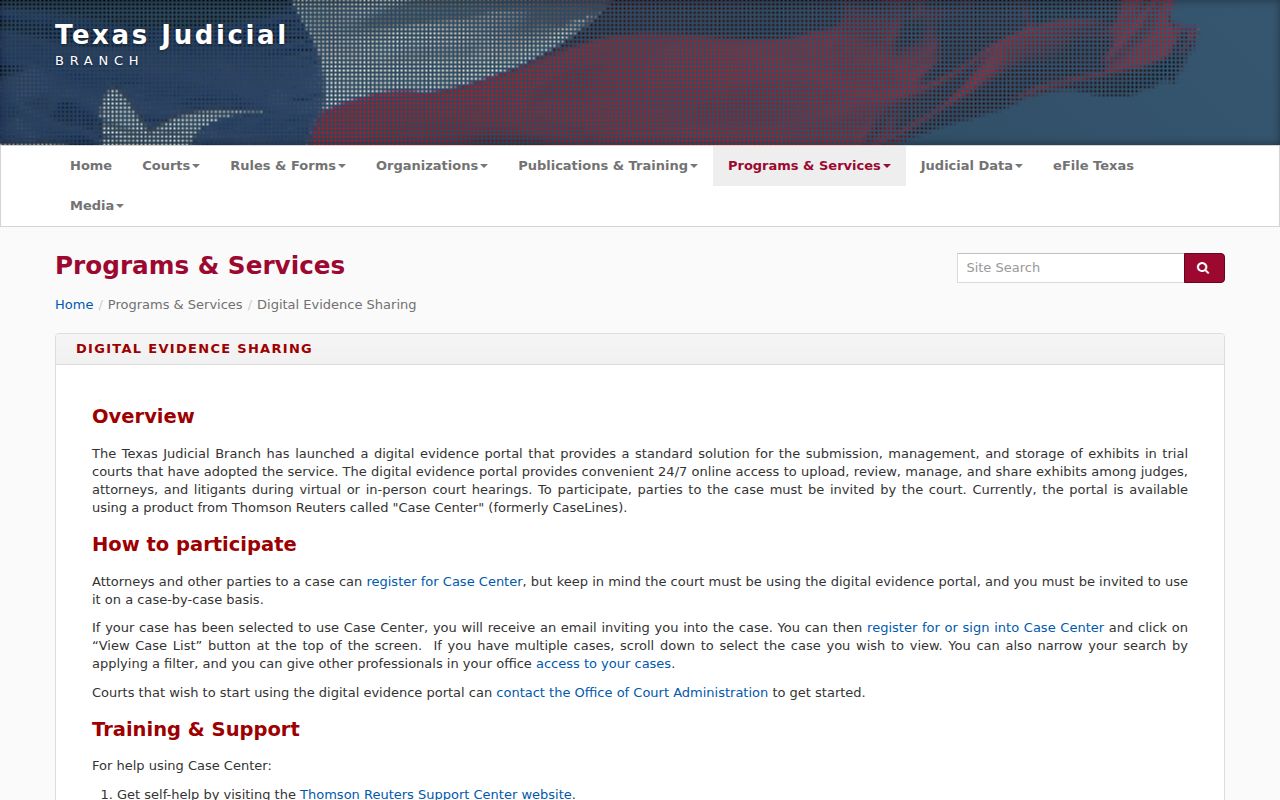
Case Center is an invite-only platform where parties and attorneys upload, manage, share, and present exhibits. It is not a public Lamb County court record portal. A public requester should ask the clerk or court about a releasable exhibit rather than assume the platform can be searched.
Lamb County Written Request Details
A good written request is easy for the clerk to match to a file. Name the Lamb County court. Give the cause number if you have it. Identify the document you want. Add an approximate filing or hearing date and a date range. Say whether you need an electronic copy, a paper copy, certified or noncertified. No cause number? Offer a party name or case-style fragment, and ask what search fee applies.
Keep the records request separate from any request for legal research. Rule 12 does not require a new analysis. If access is denied, get the reason in writing. Ask whether part of the record can be redacted and released. Ask where a Rule 12.9 appeal goes.
Sealed Records and Public Access
Texas treats judicial records a bit differently from ordinary agency files. Under Government Code section 552.0035, court records sit outside the usual Texas Public Information Act process. They fall instead under Supreme Court rules and other law. The Texas Judiciary open-records policy explains that Rule 12 governs how these records are handled.
Want a sealed docket from a Lamb County court? Read the official judicial-record policy page from the Texas Judiciary first. It lays out the request and appeal framework. That framework applies to this type of record.
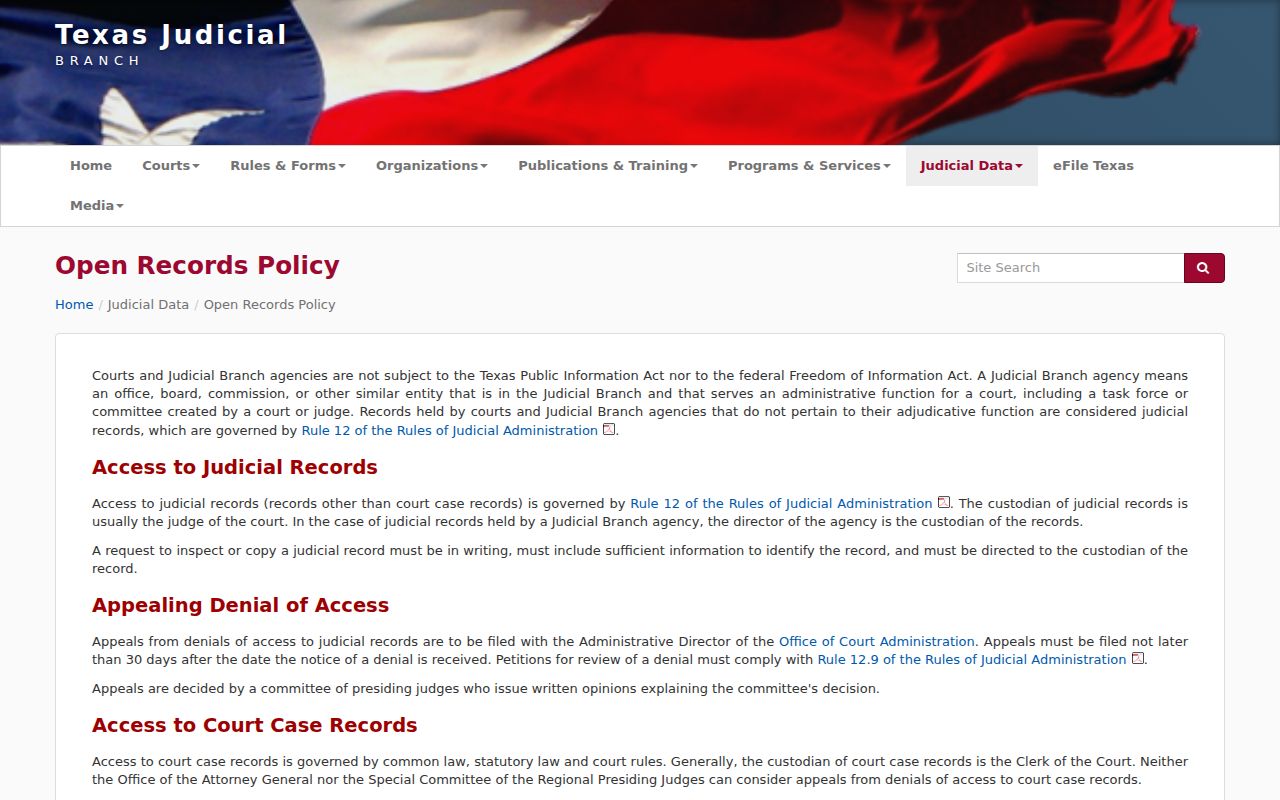
Public judicial records stay open during regular hours unless an exception applies. A written denial should state its reasons for closing a record or docket entry.
Key Texas access rules:
Rule of Judicial Administration Chapter 12 governs requests for existing public judicial records and provides an appeal route.
Texas Rule of Civil Procedure 76a presumes civil court records open and sets the process for sealing.
Texas Rule of Civil Procedure 21c controls sensitive-data handling and redaction in filings.
Texas Family Code Chapter 58 protects juvenile information.
Rule 12 allows some records to stay closed. Judicial work product, security information, Social Security numbers, family or personal-security information, and records shielded by other law are exempt. When a full document is withheld, ask whether a redacted version or the public docket entry can still be released.